

Sometimes things don’t go according to plan when playing online poker, and one of the worst things that can happen is getting eliminated on the poker tournament bubble.
The good news is that it’s not the end of the world if you find yourself on the bubble, and there are ways to make it through this part of the game. Learn about the different ways to survive the bubble in online poker tournaments and how to make the most of the situation if you feel stuck.
What is the Bubble in Poker Tournaments?
The bubble is the point in land-based or online poker tournaments where one more player must bust for the remaining players to cash. It means that players who bust before the bubble will be paid nothing, having lost their buy-in entirely. The bubble is the worst spot in which to be eliminated, as it’s the last unpaid part of the tournament.
Most players, especially amateurs who are familiar with the bubble factor in poker, fear it. It can be a nervous, tense time when every decision can be vital. One move might be the difference between walking away with nothing versus winning your buy-in back plus some profit.
On the other hand, the bubble is important for many experienced players, as this is where they wield their experience and chip stacks, set the tone for moving forward, and possibly establish the framework that’s needed to win the tournament.
The other poker bubble factor refers to a crucial point in the tournament, usually at the point of making (or not making) the final table.
In most poker tournament formats, the final table bubble not only refers to a significant pay jump but also access to a televised or livestreamed table, which can also mean that sponsorship by a poker entity or other advertiser could be on the line. Bubbling a final table in a live tournament can be disappointing, though not entirely without reward, as these are typically well-paid spots in the payout structure. This is not as much of a factor in online poker tournaments, however, as they are typically not as coveted as a major live final table appearance.
Why the Bubble Changes Tournament Strategy
Typically, the money bubble in a tournament is approached differently depending on players’ experience and bankrolls. New or beginner poker players without giant bankrolls and years of experience can be nervous about the bubble. It means the difference between leaving the tournament after hours, or perhaps days, of play with nothing monetary to show for it.
Making it through the bubble means winning something for their efforts, something to show that they survived a tournament field and finished in the top 10-15 percent of that field. Professionals and more experienced players can look forward to the bubble as a time to make moves, especially with a larger stack of chips or if the money isn’t that much of a factor to their bottom line.
In general, playing the cards correctly should produce a reward, possibly a gain that matches at least the minimum of the player’s expected value in poker. But the bubble factor changes strategy for many players, prompting them to make decisions based on bubble strategy in poker instead of EV or GTO.
The money bubble often changes players’ strategy based on stack sizes, tells, action leading up to the bubble, and position. Of course, these factors are always fluid and will impact play, such as how stack size shapes poker strategy in almost every situation, but everything is accentuated when there’s a direct connection to money via the bubble.
In essence, the bubble should absolutely change poker strategy for almost every player.
Bubble Strategy Based on Your Stack Size
A stack refers to the stack of casino or poker chips, and the size of the stack will determine the options for your next move. While this should always influence poker strategy in cash games and tournaments, there is definitely a case for adjusting strategy for different stack sizes in tournaments and on the money bubble. Let’s take a look at poker tips based on stack size when playing near or on the bubble.
The Short Stack
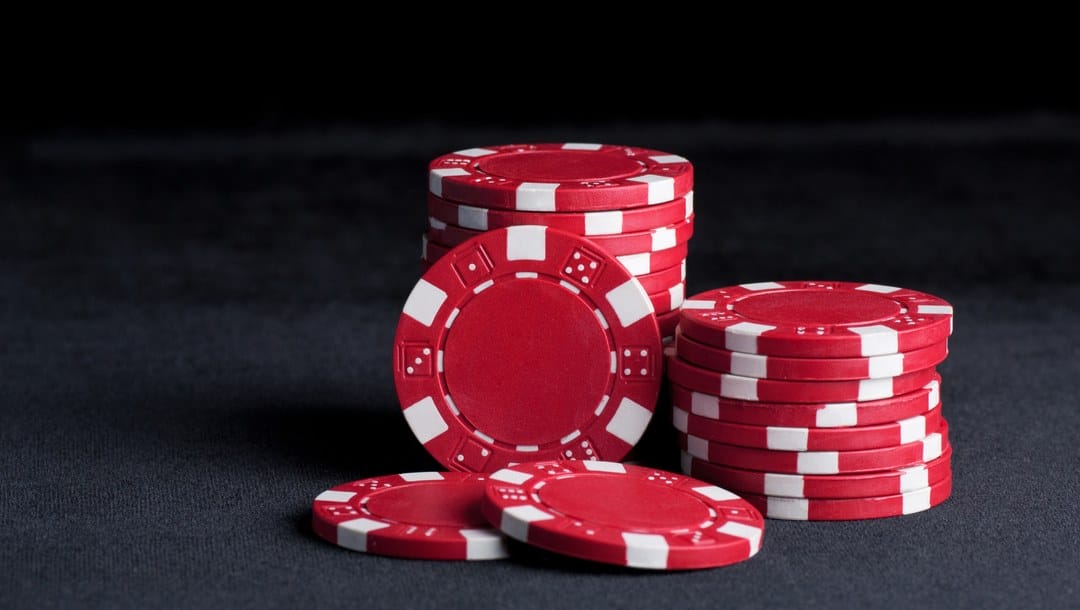
Regardless of the poker variation, be it Omaha poker or Texas Hold’em poker, the short stack is the worst-sized stack to have on the bubble. It’s regarded as the worst-sized stack to have in general, but it’s especially bad on the bubble. This is because you won’t have enough chips to exploit anyone, and you’re the player everyone hopes will lose.
This is certainly not an ideal situation to be in, so you’ll need to be very careful with your moves. The first thing to do is to find a balance of patience and discard your fear. Sure, this is easier said than done, but it’s your main key to surviving the bubble using a proper short stack tournament strategy.
Know that players with larger stacks may be trying to put you all-in with any two cards. If you look down at cards that have good equity, you’ll want to consider a push-fold strategy and go for it. When thinking about when to shove in poker, this may be that ideal opportunity.
Once the bubble bursts, you’ll still have a smaller stack to work with and an uphill battle to reach the later stage of the tournament, so you’ll need to find a double-up spot at that point, too.
The Medium Stack
Medium stacks allow more freedom, leaving you with two options, both of which are correct depending on the circumstances.
Look at how other players at your table are choosing to approach the bubble. If the players are playing very cautiously or if they have big stacks and are looking to coast into the money, this is where aggression pays off. These players are easy to spot as they’ll be looking around and updating the rest of the table with the player count. Opening as part of a preflop poker strategy with a variety of hands puts a lot of pressure on the table, especially the smaller stacks.
But be prepared for aggressive and professional players. If they make a lot of moves, tighten down a bit on your opening hands and consider polarized vs linear ranges. This is because there’ll likely be three or more bets in the pre-flop and plenty of tough spots that you’ll need to work through. While you can still exercise aggression, you’ll act more as a counterpuncher than the one instigating it.
The Big Stack
If you have a big stack heading into the bubble, you’ll likely have the most fun. Here, you’ll have more room to move around and put pressure on other players with an aggressive poker strategy. You’ll be able to leverage everyone else’s fear of busting the tournament to win more chips and improve your odds of winning.
You can take the same steps as you would with a medium stack, but you’ll have even more freedom with a big stack in a poker tournament strategy. And the goal is simple: find the tight players and go after them by opening into their blinds with a wide variety of hands, even in a blind vs blind strategy. The most important thing to remember is not to waste a lot of chips trying to bluff everyone on each hand.
Having a big stack isn’t a guarantee that you’ll make it out of the bubble, but it’s an advantage that any player would like to have.
Put your Newfound Knowledge into Practice with BetMGM
The only way to really know how to survive the bubble in poker tournaments and develop your online poker tournament strategy is to play online poker tournaments at BetMGM.
You can check out the wide array of options, including daily poker tournaments, all of which are multi-table tournaments (MTTs) or Sit & Go poker tournaments. Any of these are good ways to practice tournament stack strategy, accumulate chips, and sail past the money bubble.
But first, you’ll need to register for a new account on BetMGM to play online poker for real money. Next, make your initial deposit and start playing.
Learn how to navigate the money bubble in poker tournaments to ensure you make the money and advance into the later stages of tournaments.