Optimize Your Poker Preflop Betting Strategy


So, what is preflop betting? It is the first decision to make in a round of poker and occurs before any cards are shown. To see the first three cards, otherwise known as the “flop,” players must bet to stay in the round.
Although no cards are shown, effective preflop betting is crucial for a profitable round as it sets the initial groundwork. In preflop betting scenarios during online poker, there are numerous factors to consider before deciding whether to bet, check or fold. In this article, we’ll dissect and discuss the best preflop betting strategies to utilize.
Types of hands in poker
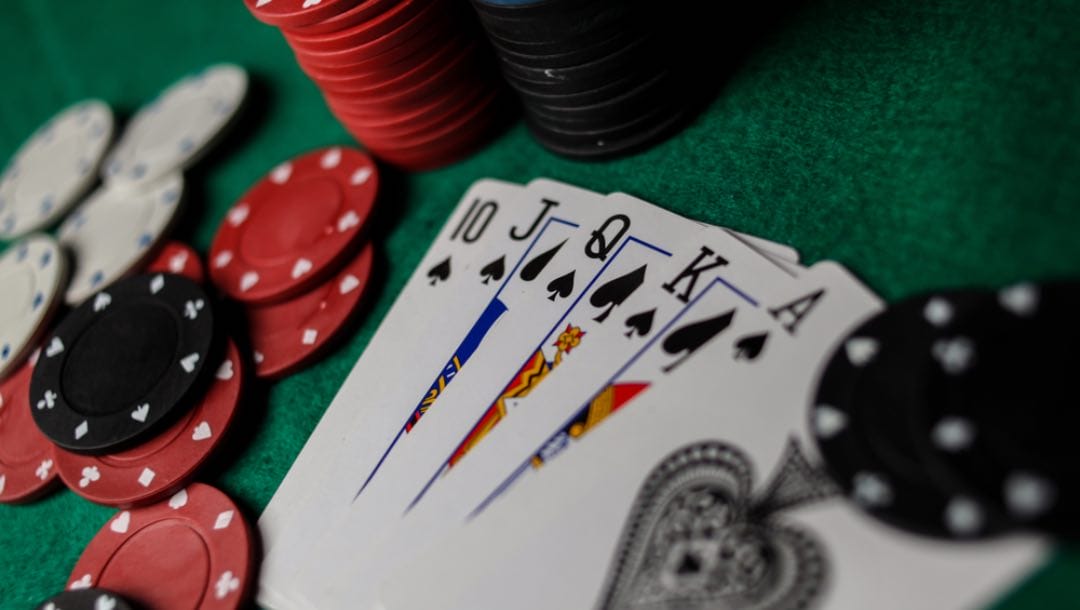
During a Texas Hold’em poker game, the two cards you’re dealt before the “flop” influence your preflop strategy. However, it’s essential not to let it always dictate your move. Once an opponent can read how you play, it reduces your chances of winning as they get a gist of when you’re holding strong cards. With that in mind, it’s important to play calculated risks and stay unpredictable. Losing a round while bluffing can go a long way for players calling your raise when you’re holding strong cards, thus winning a larger round.
It’s necessary to understand the different hands in poker. The list below showcases the different hands, from best to worst:
- Royal Flush
- Straight Flush
- Four of a Kind
- Full House
- Flush
- Straight
- Three of a Kind
- Two Pair
- One Pair
- High Card
Strong preflop starting hands
Live poker online involves a lot of quick rounds, so deciding when to play is key to a successful preflop strategy. If you’re not confident in your first move, the remainder of the round can become tedious – a strong foundation needs to be set.
Several card combinations are hard to resist and put you in a strong position for the round:
- Connectors: AK, AQ, AJ, KQ (A=ace; K=king, Q=queen, J=jack)
- Pocket pairs: AA-TT (T=10)
Connectors expose players to numerous scenarios, such as a straight, full house or two pair. In comparison, pocket pairs can lead to a two pair, full house, three of a kind or four of a kind. If you’re dealt either of these combinations, it raises the chances of a profitable round. However, it’s important to be mindful of the cards placed down by the dealer as opponents may have stronger hands if the flop consists of lower cards. For example, if you hold AA and the flop consists of a 4,6,7 it opens the chances of opponents with weaker cards having a straight (five in a row). On the other hand, if you hold an AJ and the flop is J,8,2, then probability-wise, it is worth proceeding as you hold the highest pair (JJ) and highest card (A).
Player positioning during a preflop
In a Texas Hold’em poker game, a button moves clockwise between players after each round. When it is in your possession, it dictates that you’re the small blind and the opponent on your left is the big blind – blinds are decided before the game but increase as the table thins out. Holding a blind means you must play in. However, once everyone has played, it returns to the small blind, who has the decision to bet, raise or fold. If you’re neither of the blinds, you have the option to fold without having to put anything into the pot.
Preflop poker strategies

Playing online poker tournaments involves tables filled with people. Some will know what they’re doing, although the majority won’t. By understanding when to use effective preflop strategies, you will find yourself in a strong position for the end of the game.
Casino table games require a lot of concentration and poker is no exception. To keep your head in the poker game (other than being dealt strong cards), it’s important to consider some of the external factors. These include your opponents’ style of play, the stage the game is in, your position, and what’s happened before you.
Winning live poker tournaments requires one to play many rounds. That means there is no need to feel committed to playing hands when in the blinds – if it doesn’t feel right, just leave it. Allow other players to make this mistake. As the number of players decreases, you can afford to start playing more aggressively.
Playing aggressively is an excellent strategy for reducing the number of players in the round, thus raising the chance for success. Raising the big blind by three times the amount will result in numerous players folding the round. If you raise small, it will entice more players to enter the round.
Furthermore, monitoring your positioning to the blinds is another great indicator for your preflop strategy. If you’re closer to the button, fewer opponents can have a good hand behind you, so it is a chance to raise the preflop confidently. The opposite applies if you’re far away from the button.
Understanding the players around you is crucial to poker success. By noticing players’ betting behaviors, such as whether they only bet when dealt good cards, you can deduce whether the hand is worth betting or raising for. Specific to preflop scenarios, if a player such as the one described raises the blinds, it may be a good option to sit out the game and let other players make mistakes.
Test your poker skills on BetMGM
With thousands of online casino games to choose from, why go anywhere else? BetMGM hosts an array of live poker tournaments in various formats and buy-in amounts that can be played anytime, anywhere. So, register with BetMGM today, stay up to date with our poker tournament tips and test your skills.