

Betting is the essence of poker, in both live and online poker. Most bets are calculated decisions, but some bets simply can’t be avoided because they’re forced by the rules of the game. A key part of betting is the blinds. These are the small blind and big blind. These poker blinds (often described as the backbone of poker) force players to have skin in the game, which helps to ensure there’s always plenty of action on the table.
Like it or not, if you want to know how to play Texas Hold’em and other similar variants, you have to know about all the different aspects of the game, including the button, blinds, antes, and straddles. Here’s what you need to know about blinds in poker.
Poker Blinds Defined
As mentioned, poker blinds are forced bets made before the start of play for each hand. They’re similar to the antes familiar to players of other table games, but with one key difference. All players at the table have to place antes if they’re in play, but only two players have to place blinds. These are the players occupying the small blind and big blind poker positions, and they’re the second-last and last players, respectively, to see action before the flop. At the end of each hand, the blinds move one position in a clockwise direction alongside the dealer button.
What are blinds in poker, exactly? They’re bets. Typically, the small blind is half the size of the big blind, and the amounts are set before the cash game or tournament begins. In a cash game, the blinds are the same amount for each hand, round after round. In a tournament, however, the blinds increase as the levels dictate, as written in the pre-determined tournament structure.
In some cash games, players can allow straddles. A straddle bet is essentially a third blind set at double the size of the big blind. This player acts last preflop, but normal positions resume for postflop action.
The purpose of the blinds is to introduce a cost to participate in the game. This motivates players to enter pots instead of just folding until they’re dealt a premium hand. A straddle is imposed to increase the stakes, pot sizes, and the action.
Sizing the Blinds
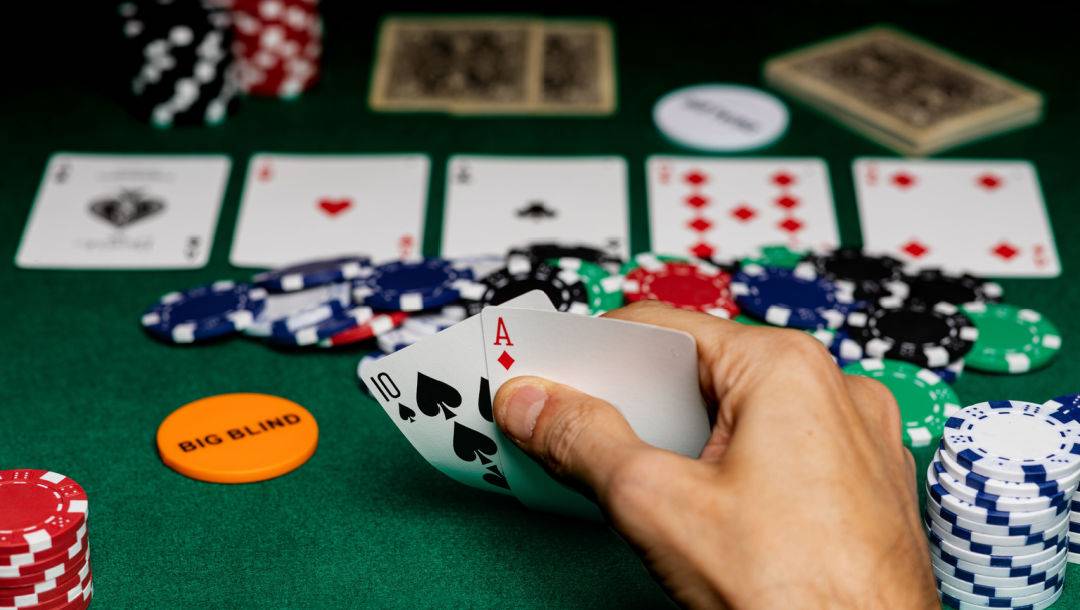
The big blind-to-small blind ratio is called the blind structure. As a rule, the big blind is twice the size of the small blind, or slightly larger.
The host determines the blind structure in a cash game, after which it stays the same for the rest of the game. Say you sit down at a $2/$5 No Limit Hold’em cash game. This indicates that the small blind will be $2, and the big blind $5 for as long as you stay at the table. This also indicates that the minimum bet in Texas Hold’em games set at $2/$5 will be $5 – the size of the big blind. The cash game buy-ins for these situations can range from $200 to $2,000, as set by the casino or online poker site.
Where blind structures really come into their own is in poker tournaments. That’s because the blinds increase in size at different stages of a tournament. The structure sheet for each tournament dictates the tournament blind levels and chip structures, showing the changes that will happen at each level increase.
Online Poker Tournament Strategy with Blinds
Effective stack size management is an essential part of online poker tournament strategy for beginners, as it’s important to your overall poker journey. For example, speculative hands are more valuable as a part of early- and mid-stage tournament strategy, when the blinds are low and stacks are bigger. In the later stages, with smaller stacks and bigger blinds, high cards with good pairing potential are premium.
In a Texas Hold’em poker tournament, you need to consider the blinds as compared to your starting and current stack size, the stacks of your opponents, the time clock showing how much time is left before the levels (and blinds) increase, and how to best accumulate chips during that time. The comparison of blinds to your own stack size is measured in big blinds. For example, you might hear a player say that they have 20 bigs or 20BB, which means they have 20 big blind-sized bets in their arsenal.
Managing stack sizes and implementing corresponding strategies lets you broaden or restrict your options. In general, if you have 10 big blinds or fewer, the proper move would be to use a part of your push-fold strategy. If you have 10 big blinds more than an opponent, you could implement the ten-to-one rule. What all of this means is that your strategy will change as often as your stack size.
Tournament organizers typically provide blind charts and the full tournament structure details before the event, so you can plan ahead and have strategies ready.
Stealing the Blinds
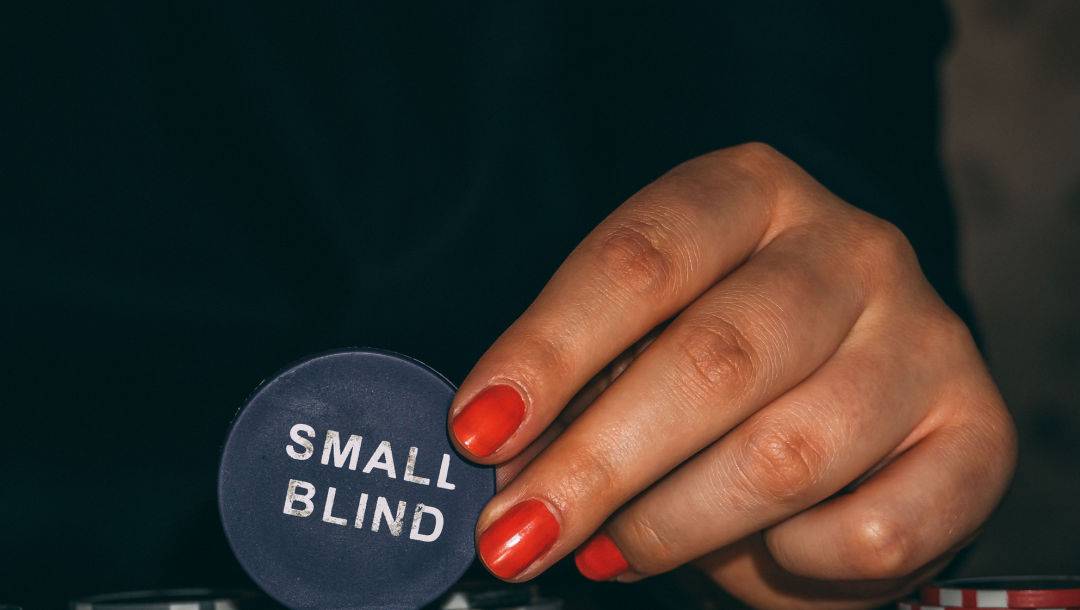
A big disadvantage of being in the small blind or big blind position is that these players are always out of position after the flop. As a result, opponents will often be tempted to “steal the blinds,” meaning overbetting or simply betting to force other players out of a hand and keep the blinds without any postflop action.
This is only one of many button position strategy options, which can include such moves as bluffing, targeting tight players who call instead of raise, and even folding when holding a marginal hand against very experienced players. This can feel complicated, especially for beginners just tapping into poker strategy, which is why many new players start online where micro stakes poker games are available. They give players a chance to play differently from the blinds in cash games to see the results without risking a lot of money.
Defending the Blinds
Many players in blind positions fold when faced with a raise because they’ll most likely be in a tough spot (out of position) later in the hand. As a result, they stand to lose more than just their blind bet. But defending your blind (calling the raise) can be the right thing to do, depending on your hand. Raising from the big blind, for example, can also be effective as a blind-vs.-blind strategy when the table folds around to the small blind, who raises, seemingly to steal the blinds.
For beginner players, a “fit or fold” approach is best, playing according to the standard for the best and worst starting hands. Call with pairs from sevens or better, J-T suited or better, A-K, and A-Q. If you have pocket queens, kings, or aces, you should raise and try to take it. (If you’re skillful, this could be a good time to slow play a strong hand or try a squeeze play.)
Play the Best Online Poker at BetMGM
Ultimately, one of the best ways to learn how to steal the blinds or defend them is to play more hands of online poker at BetMGM. Register for a premium gaming experience in a safe, secure environment with like-minded players. Enjoy poker cash games, sit-and-go tournaments, daily tournaments, or anything from the weekly poker tournament schedule to suit your skills and budget.
When you sign up for a new account, you can claim your BetMGM Poker welcome offer to help build a stronger bankroll from the start. Remember, every round played is another chance to improve your blind strategy and overall poker skills.
Raise your game with better decisions on poker blinds. Learn how to steal, defend, and incorporate blinds into your online poker tournament strategy.