
For seasoned competitors, understanding poker positions is crucial. We dissect each position and explain the importance of poker table positions.
Home »
Poker Positions Explained: The Importance of Position in Poker
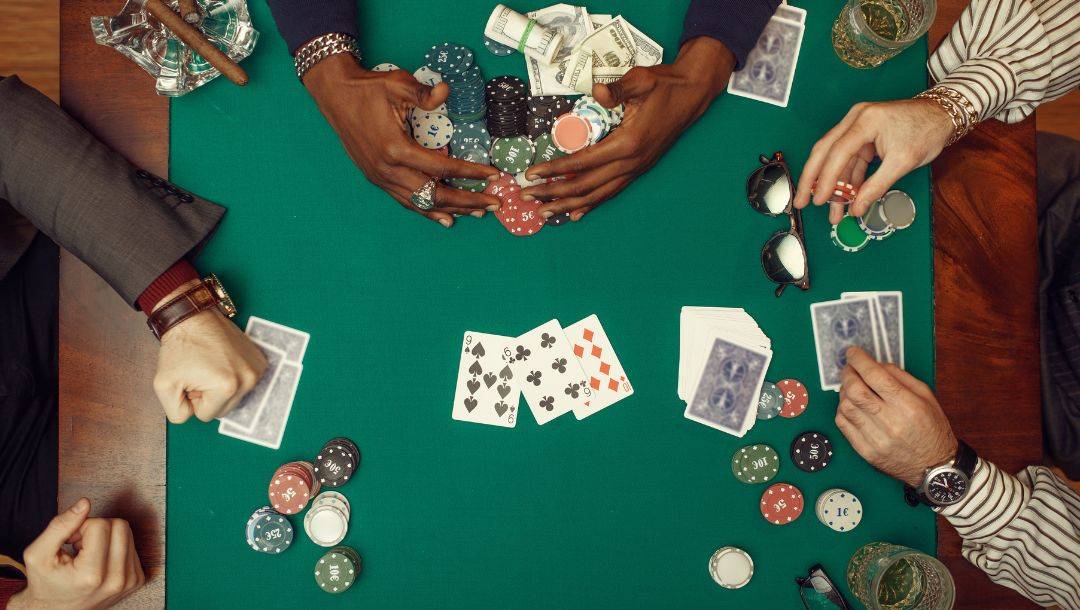
Understanding the importance of poker table positions is crucial during poker tournaments where you can face upwards of 100 players during a single tournament. For experienced players, this entails facing players of all skill levels while adjusting their poker strategy to unpredictable players. Due to the number of players you’ll face and the fast-paced nature of tournament play, being able to adapt your strategy to counteract opposition is what separates amateurs from professionals.
And understanding poker positioning allows one to strategize effectively, which demonstrates just how strategy and positioning go hand in hand. A player’s positioning around a poker table should have the same influence on their strategy as the cards in their hand. For instance, if you’re holding a strong hand such as pocket aces (ace-ace) while being the small blind — which is regarded as the weakest position — the round becomes harder to control as you’re the first player to bet each round. In other words, being in an early position allows opponents to evaluate your move and strategize accordingly, exposing you to late-position players.
Read on as we discuss the importance and fundamentals of each poker position.
The Different Poker Positions
After getting to know the basic rules and hand rankings, understanding the relevance of each poker table position should be next on your list of things to master. So, what is a position in poker? In essence, your positioning is based on where you’re placed at the table in comparison to the blinds (small and big blind.) The closer you are, the earlier your position is. Small blind bets first, big blind second.
A player’s positioning around the table is split into three categories: early, middle and late. For beginners, it’s worth noting that your position changes each round as the blinds move clockwise — to the next player — once each round is concluded. This means you can go from being in the earliest position (small blind) to the latest (button) in one round.
Regarded as a core element of any effective strategy and an imperative to succeeding at both in-person and online poker, professionals use positioning to guide their strategic thinking. Take the World Series of Poker, for example. Here you’ll frequently watch the world’s best play the majority of their hands in position and fold more regularly when out of position.
Below, we discuss the different poker table positions.
Early Positions
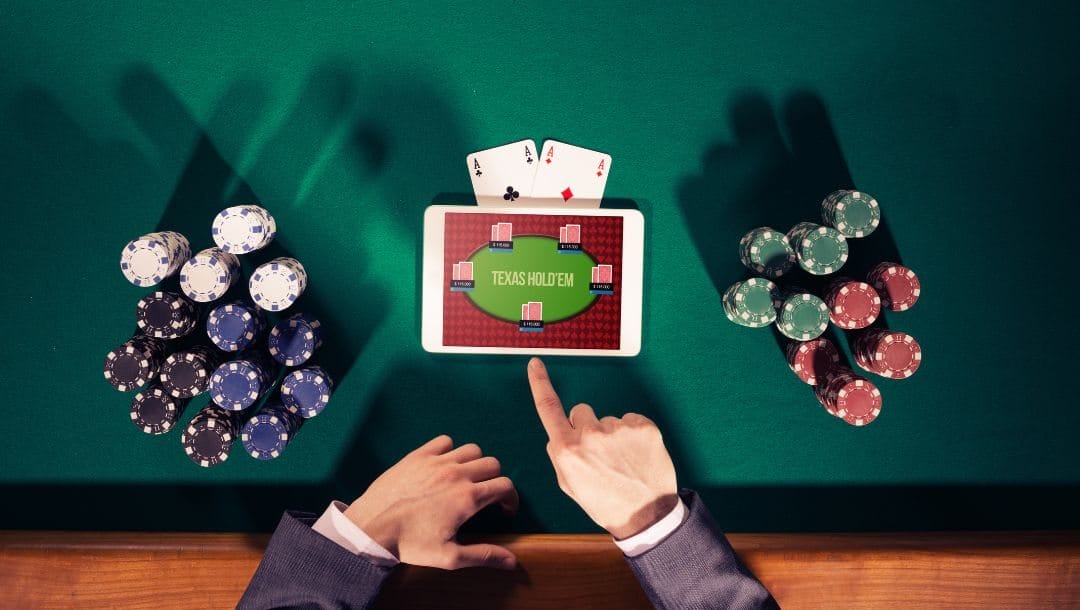
The small blind and big blind are the first two players to bet, making them the earliest positions. Irrespective of your hand or the number of chips in your stack, if you’re either of the blinds, you’re required to stake the fixed amount.
Additionally, the player sitting to the left of the big blind is also regarded as being in an early position. The correct poker terminology for this position is “under the gun” (UTG.) Moreover, if you’re playing with 9 or 10 players, the next two seats (UTG+1, UTG+2) are also regarded as early positions.
Once a new card is dealt, you’re one of the first to respond. This means time is not on your side, so the amount of information you can gather on the opposition and your hand is limited. Early positions are considered the trickiest spots to win from.
The lack of information compared to your opposition means players should play with tighter hand ranges and refrain from engaging in aggressive bets. This is why early-positioned players tend to fold more often.
That said, it’s not impossible to win a round from under the gun or either of the blinds. Be sure to scan the flop to dissect the hand possibilities and identify how your hand ranking fairs against the likelihood of a nut hand appearing.
If you decide to play, it’s best to slow play through checks or small bets in order to let the late-position players make the emphatic bets. This will give you an additional opportunity to extract more information based on their betting behavior.
Middle Positions
Here, you’re positioned in the middle of the action. You start to gain the advantage of being in a later position, even though that advantage remains limited by the fact that other players will still be playing after you.
The middle is split into the Lojack (LJ) and Hijack (HJ) positions. The added benefit of seeing the early position players’ bets means you’re able to loosen your hand range slightly. And in cases where you’re holding a strong hand, both Lojack and Hijack are in great positions to stay under the radar by calling the bets of the opposition. Otherwise, if you’re the first to stake big, you’ll automatically gain the table’s attention and your next few moves will be heavily analyzed.
Focusing on the postflop, if late position players fold, Lojack and Hijack players have the opportunity to be more aggressive and control the pot as they become the last to bet.
Late Positions
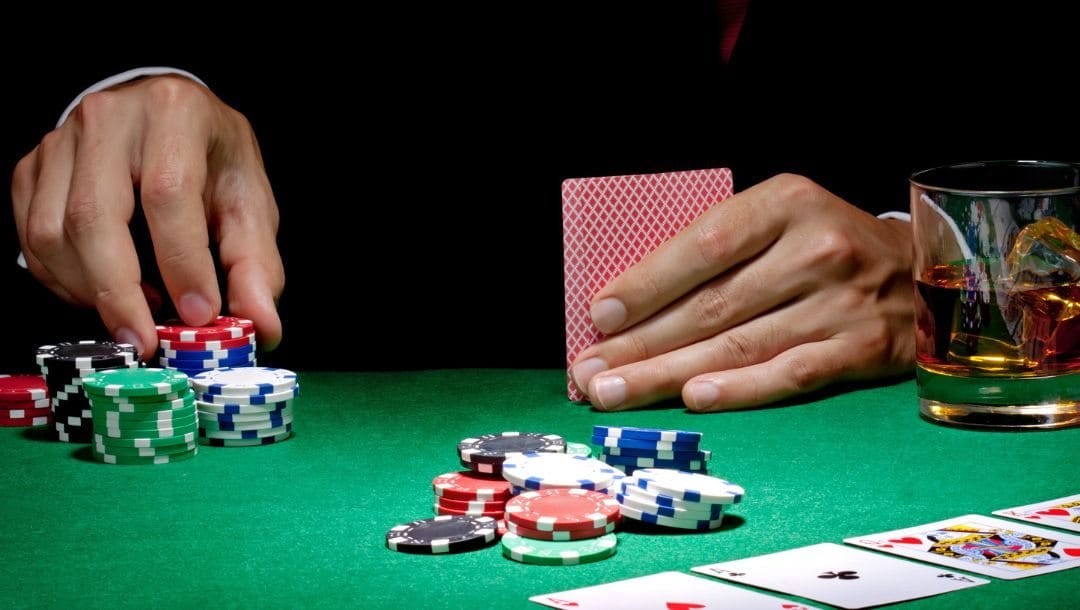
Similarly to the middle, the late positions are divided into two seats — the cutoff and button. Statistically, in the course of your online poker career, you’ll make most of your winnings in either of these two positions. From these positions, you’re able to gather the most information on your opponents’ and the community cards.
For example, if you notice a player who folds regularly (and raises the pot in the process,) it suggests that they’re holding a strong hand since they rarely bluff. This, then, is the main advantage of sitting in the cutoff or button position: you’re able to pick up on these informational clues, gain full knowledge of your opponents’ behavior and use what you know to make the best decision possible.
As strong as sitting in the cutoff may be, the button is regarded as the best position in poker because they have the last call of each betting round. Still, both positions have the ability to maximize the advantage of being in a favorable position.
For instance, your influence on pot control becomes much stronger in the late positions as you’re (usually) able to dictate how big or small the pot will be going into the next round. Also, if the round has gone stagnant with checks and small bets, you’re in a great position to bet big, scare off opponents and steal the pot.
Finally, late-position players have the advantage of more bluffing opportunities since they have the most time to analyze the community cards relative to the bets being made. For example, if the turn produces an ace of hearts, ace of diamonds, 8 of clubs and 7 of clubs and the bets remain small, it suggests that no one is holding an ace. Therefore, raising the pot considerably could lead your competition to believe that you indeed have an ace, and play right into your hands by folding.
Play Poker at BetMGM
Want to test your poker position knowledge? Available 24/7, online poker provides the perfect opportunity to understand and test new strategies under game-play conditions. Register today, play with friends and explore our extensive poker variations — from Texas Hold’em and Seven-Card Stud to Omaha.
In addition to poker, BetMGM gives you access to an endless array of online casino games. From themed slots and bingo to roulette and blackjack, play from anywhere and anytime.