

The majority of poker tournament series are No Limit Texas Hold’em (NLHE) events, with Pot Limit Omaha coming in a distant second. If you have participated in such tournaments, you’ll know that they’re all about thrilling action and prize money that ranges from decent to huge. However, there are many more types of poker tournaments beyond Hold’em. Today, you can take part in Draw Poker, Lowball Poker, and Mixed Game Poker tournaments, with many different non-Hold’em poker games to explore and enjoy. Keep reading to find out more about these popular alternative poker formats.
Draw Poker
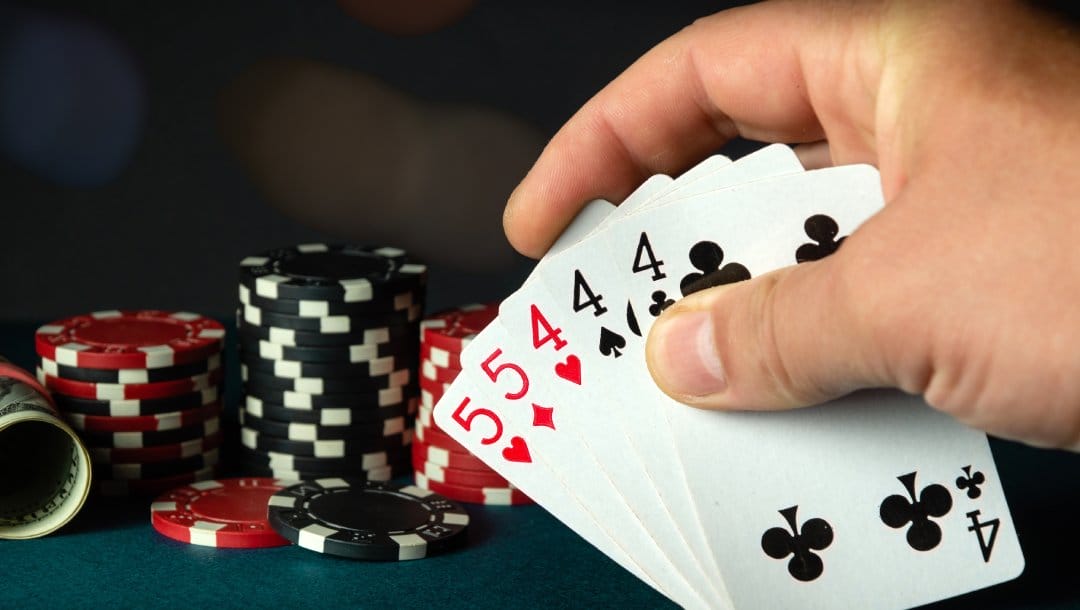
ong before Texas Hold’em game variations came to dominate the scene, the most popular poker variants in live tournaments would typically be some form of Draw. One of the oldest forms of poker, Draw games distinguish themselves by dealing players a full hand before betting begins and allowing them to discard and draw replacement cards.
Five-Card Draw
The most recognizable Draw poker game found in tournaments is Five Card Draw. It’s easy to learn how to play Five Card Draw poker:
- Each player pays an ante and is dealt five cards, all face down.
- A round of betting ensues.
- Players still in the hand may discard up to four cards and receive replacements.
- Another round of betting takes place.
- The best five-card hand wins the day.
Badugi
One of the most popular poker variants that gained a new following is Badugi. The game takes parts of Triple Draw Lowball, uses blinds, and creates its own game. The basic idea is to form a four-card hand with no repeated suits or pairs.
The best card in Badugi is A-2-3-4 of all different suits, whereas the worst hand is four kings. This is because, in Badugi, hands with repeated suits or pairs don’t actually qualify as Badugi hands. So, a hand like four kings would not qualify at all.
If no player has a four-card Badugi hand, a three-card Badugi hand can qualify, as can a two-card hand if there are no three-card Badugi hands. Aces are low cards, and rankings are determined by the lowest high card. Once you get the hang of Badugi, it’s easy to know when to fold, so it’s one of the best types of poker for beginners who are risk-averse. Keep in mind, however, that while Badugi offers a unique structure that some beginners find approachable, mastering its hand rankings and draw strategy requires practice.
Here’s how the game plays out:
- Each player receives four cards, face down.
- The initial betting round starts.
- Players can discard up to four cards and receive replacements from the dealer.
- Another round of betting leads to another round of drawing cards.
- A third round of betting leads to the third draw.
- A final round of betting determines the winner.
Lowball Poker

Lowball poker is somewhat like Texas Hold’em turned on its head. Instead of the highest hand, it’s the lowest hand that wins. This gives rise to completely different strategies, making for great variety and satisfying gameplay.
2-7 Triple Draw
Deuce-to-Seven Lowball gameplay is similar to Seven Card Stud in terms of betting and drawing, but the hand rankings are completely different. Straights and flushes are the weakest hands, while the strongest hands are unpaired, unconnected hands of different suits.
The best hand is 7-5-4-3-2 with no flush or pair, commonly called the ‘number one’ or ‘wheel’ in Deuce-to-Seven Lowball. The next strongest hands are Eight Low, Nine Low, and Ten Low, with eight, nine, and ten as the highest cards, respectively. Aces are always high in Deuce-to-Seven lowball, so A-2-3-4-5 is not a low hand.
If multiple players have the same low hand, the lowest second card is the winner. For example, 2-3-4-6-8 will beat 2-3-4-7-8.
A-5 Triple Draw
This game plays out like Five Card Draw but with different hand rankings. Suits and straights don’t count – only the low hand ranking is important, starting with the highest card and moving downward. The best hand you can get in Ace to Five Triple Draw is Five Low (A-2-3-4-5), also known as a Wheel. Next is Six Low (any unpaired hand with 6 as the highest), followed by Seven Low, Eight Low, and so on.
Stud Poker
This broad form of poker is also one of the most common in poker history. All types of stud poker involve some cards face down and some up throughout multiple rounds of betting. Stud poker tournament formats are based on antes and bring-ins, rather than blinds. The further you progress, the more they increase.
Seven-Card Stud
Once among the most popular poker variants in live tournaments, Seven Card Stud is making something of a comeback today. It can be somewhat of a learning curve to get started with this technical game, but the fun makes it worthwhile. Here are the basics of how to play 7-Card Stud:
- Each player receives seven cards throughout the hand, the goal being to create the best possible five-card poker hand.
- Players are dealt three cards, two face down and one face up. Four more cards are then dealt (three face up and one face down) in successive rounds.
- There is a total of five betting rounds in which players can check, bet, call, raise, or fold based on their hands and opponents’ cards in view.
- Players show their hands after the final betting round, and the best five-card hand takes the pot.
Key skills to succeed in Seven Card Stud are hand selection, reading opponents, and consistent betting discipline.
Seven-Card Stud Hi-Lo
One of the lesser-known poker variants coming to the fore these days is Seven-Card Stud Hi-Lo. Basically, it’s a lowball and highball game at once, with the prize money divided into a low pot and a high pot. The best low hand wins the low pot, while the best high hand wins the high pot. It’s also possible to win both and scoop the entire pot.
Razz
Another lowball game you’re likely to come across while learning how to play the different types of poker is Razz. This is basically a lowball version of Seven Card Stud, with exactly the same gameplay, but with special betting rules. The major difference is that the player with the highest upcard, or door card, has to place the come-in bet at the beginning of the first betting round. On subsequent streets, the player with the lowest cards showing has to act first. Apart from that, it’s all about making the lowest hand, with the same hand rankings as Ace to Five Triple Draw.
Mixed Games
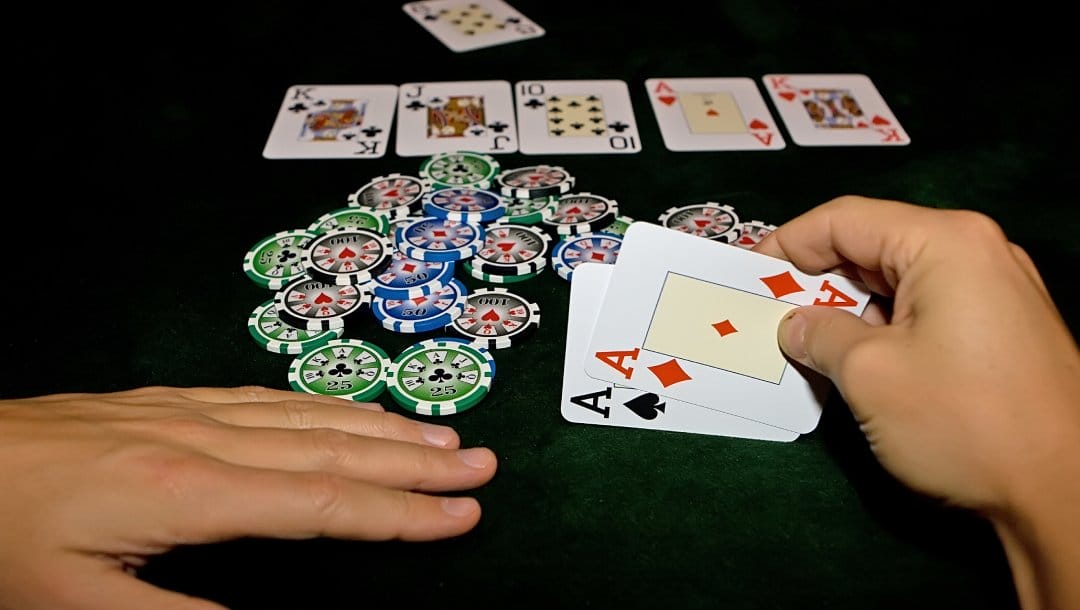
To cater to players who enjoy variety, poker tournament organizers often put on mixed poker games such as Dealer’s Choice, Razz, and HORSE poker tournaments.
H.O.R.S.E
The most common mix of highball and lowball tournament types is HORSE poker, which consists of a series of games in the following variants:
- Hold’em (Limit Hold’em)
- Omaha Hi/Lo (PLO-8)
- Razz
- Seven-Card Stud
- Eight or Better (Seven-Card Stud Hi/Lo, Stud-8)
Other versions of this game play as HOSE to eliminate Razz, ROSE to eliminate Hold’em, or HOE to use only Hold’em, PLO-8, and Stud-8.
8-Game Mix/ 10-Game Mix
For an even more complex and challenging experience, the 8-Game Mix format includes the HORSE variants but also adds regular Pot Limit Omaha, No Limit Hold’em, and 2-7 Lowball Triple Draw.
Then there’s the 10-Game Mix format, which is used at the Poker Player’s Championship. To get anywhere in this tournament, you will need to master Limit 2–7 Triple Draw Lowball, Limit Texas Hold’em, Limit Omaha/8B, Limit Razz, Limit Seven-card Stud, Limit Seven Card Stud/8B, No Limit Texas Hold’em with antes, Pot Limit Omaha, Badugi, and 2–7 No Limit Draw Lowball.
Sound complicated? All it takes is practice. The good news is that these are the types of poker you can play with friends who are serious about improving their skills.
Dealer’s Choice
Anything goes in Dealer’s Choice Poker, which can often combine up to 18 or 21 games in a single tournament. This often includes variations of Badugi like Badeucy and Badacy, Big O, Five-Card Draw High, and 2-7 Razz.
Play Poker Online at BetMGM
If you’re looking for variety when you play poker with real money, BetMGM has what you’re looking for. Register to enjoy cash games and tournaments across a full spectrum of poker variants, from Texas Hold’em and Omaha through to lowball Stud Poker. New to BetMGM? Enjoy an online poker welcome bonus when you sign up.
Expand your poker horizons with poker games that aren’t in the Hold’em category. Discover all the types of poker tournaments beyond Hold’em.