Poker is hugely popular, and there are a lot of reasons for this, the main one being that it’s a fun, social game. You can play games for money or for free, and there’s an element of strategy involved to keep you interested and challenged as you continue to play. These are pretty good reasons to invest some time in learning to play poker. But where to start? Here’s some information to get you started.
Learning Poker Online vs Offline: Which is Better?
Ask a range of poker players about the best way to learn poker – online poker vs live poker – and you’ll receive a near-equal measure of both answers, with some simply saying that a combination is best. The truth lies in your personal preferences and how you best learn.
Some people are in-person learners, and they need to sit at a physical poker table, count out and stack the chips, rake the pot with their hands, and see the cards. These types of people use physical poker tells on opponents, placing greater importance on instinct than numbers and charts. They are more at ease in a social setting, getting to know other players, and learning by physical trial and error.
Other people learn best in private settings, reading the rules and learning without any face-to-face pressure. They prefer to make mistakes without guilt or worry, and they like to learn more through the experience of playing many hands, all of which is available through online poker. They are able to download hand histories for analysis, and they can plug numbers into online HUD resources to help find the best strategies.
Ways to Learn Poker Online
There are many ways to learn to play poker online, from searching basic terms and hand rankings to game rules and basic strategies. At any point, you can search for more information on any topic related to poker, and you’ll find a plethora of tips for learning poker at any skill level, from beginner levels to high-stakes poker.
In addition, since the best way to learn to play poker is by actually doing it, there are real-money sites like BetMGM that offer the game at any time of the day or night. At your convenience, you can practice and gain experience, learning by trial and error and seeing the game as it plays out in front of your eyes.
Go Online
Firstly, most of what you’ll learn about the game will probably come from internet searches and playing online poker.
Start by searching these terms to acquire the basic information:
- Poker rules
- Poker variations
- Poker hand ranking chart
- Bankroll management
- Texas Hold’em rules (the most common poker variant)
- Texas Hold’em poker basics
- Poker positions
- Poker odds calculator
Once you read up and take notes, you should begin putting those terms and tips for learning poker into practice, and it’s easier to play poker online when doing this.
Find a Poker School at an Online Casino
This is by far the easiest way to learn to play poker. BetMGM, one of the best online poker sites, has an expertly developed “poker school” that you can visit online. You’ll be able to access online poker guides, rules, charts, and poker tournament and cash game tips. The best thing about starting this way is that you can go straight from learning to play poker online to stepping up to the virtual felt via the BetMGM app on your mobile or desktop device. While these are real-money games, you can start at the micro-stakes level and learn poker at your own pace.
Watch Instructional Videos Online
Internet platforms such as YouTube have plenty of educational videos for beginner poker players. These are great ways to learn to play because they give you visual representations of the rules and poker basics you’ve been reading about in your online searches.
Even after you start playing online, you should always take notes on concepts and strategies that aren’t clear, then return to YouTube to search for videos on these topics. There are instructional poker videos at every level that explain topics in great detail. Combine those with the BetMGM Poker blog and its plethora of articles, and you can overcome any obstacles to continue your learning process.
How to Learn to Play Poker Offline
For people who benefit the most from playing poker offline or live, there are resources available in this arena as well. There are many poker books that have been written through the years, from classics like Doyle Brunson’s “Super System” to “Poker for Dummies” by Lou Krieger and Richard Harroch. Most players who prefer playing live poker still get much of their information online. Live poker for new players is very common.
Get a Deck of Playing Cards
If you plan to play offline, you’ll need to learn to handle physical playing cards – so if you don’t already own a deck, buy one. Practice this routine as often as you can, whether alone or with a friend.
Shuffle and deal four hands of hole cards face down (as if there are four people in the game). Now decide which hand is best based on Hold’em poker hand rankings. Deal the flop and assess the hands again, observing how the advantage may have changed. Repeat this for the turn (sometimes also called fourth street) and again for the river (or fifth street). The aim is to keep practicing this routine through nine hands until you can determine the best hand without hesitating for more than several seconds.
Next, find something to serve as the poker chips. They can be actual chips, coins, or even nuts or candy – whatever you have handy. Perform the same deals for four players as before, and this time start putting out the small and big blinds, making bets, and even raising a hand or two. Get the feel for counting the value of the chips, betting order, and how position plays a role in betting patterns.
Take Lessons at a Brick-And-Mortar Casino
Many casinos offer free table-game lessons, which is a great way for novice players to learn the fundamental rules, strategies, and etiquette of poker games. MGM Resorts casino destinations are a great place to start, provided there is an MGM-affiliated casino in your area that offers lessons. Otherwise, most casinos with poker rooms will offer a time to show new players how to get comfortable at the tables.
You’ll be taught by a friendly dealer who will explain the basic rules for how to play live poker and then show you some example hands to demonstrate the different scenarios that can happen with each. After this, you can usually play a few practice hands on your own, using chips that don’t have real value, so you can see how you do. The dealer will explain the different odds of landing each type of hand and demonstrate how the betting works. You’ll also have an opportunity to ask questions, which is a great way to fill in any gaps in your knowledge.
Find a Home Game
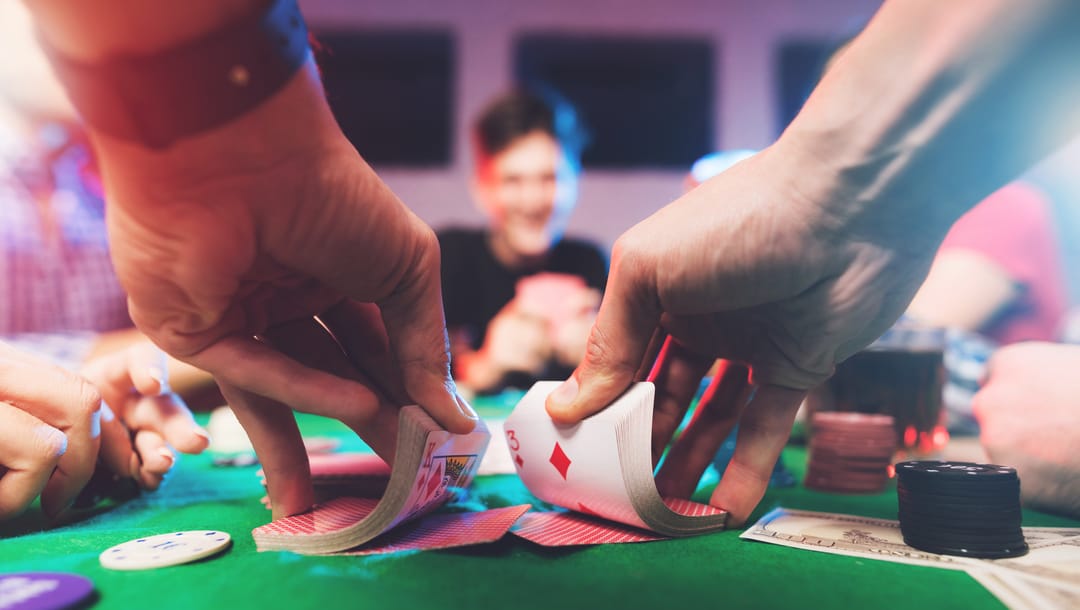
If the social side of the game is what appeals to you most about poker, ask around your circle of friends or even find someone in your neighborhood who holds regular home poker games and request an invitation. You may even be able to start your own with others who want to get started. Either way, you’ll get to learn the ropes in a relaxed, friendly environment. If you’re a hands-on learner and want to enjoy some chill time with friends, this is the way to go. You don’t even have to play for money – it could be something nominal, like matchsticks or candies. But if you do decide to bet money, make sure everyone at the table has agreed on the maximum stake and that you’re all happy to bet at that level.
Get Your Hands on the Best Poker Books
There’s a reason poker books, even in the internet era, are still so popular. They let you learn at your own pace, skim over what you already know, and reread any aspects you’re still not completely clear on. Books are a fast track into the poker world and provide a shortcut to obtaining poker theory basics, tournament and cash game strategies, tips, and advice from the legends of poker themselves.
Our top 10 recommendations (in no particular order) are:
- “Harrington on Hold’em” by Dan Harrington
- “Elements of Poker” by Tommy Angelo
- “Essential Poker Math, Expanded Edition” by Alton Hardin
- “Getting Started in Hold’em” by Ed Miller
- “Strategies for Beating Small Stakes Poker Tournaments” by Jonathan Little
- “Every Hand Revealed” by Gus Hansen
- “Sit ’n Go Strategy” by Collin Moshman
- “Moorman’s Book of Poker” by Chris Moorman
- “Phil Gordon’s Little Green Book” by Phil Gordon
- “Super System 2” by Doyle Brunson & more.
Cultivate Realistic Expectations
If you enjoy the social and thinking side of poker, you’ll always be a winner. Keep in mind that no matter how many books you read, charts you study, or tutorials you watch, poker is a game of skill, practice, and luck.
If your plan is to quickly make real money playing poker, then you’ll be disappointed. To make any profit over time, think of it as a marathon, not a sprint. You’ll need to accept that mastering poker is a long-haul grind of honing tactics, betting strategies, and reading people, as well as knowing the cards won’t always play out the way you want them to.
The most valuable advice we can give you about how to learn poker online or at brick-and-mortar casinos (or elsewhere in the real world) is to manage your bankroll effectively, make sure your expectations are realistic regarding poker luck vs skill, and have fun.
Learn to Play Your Best Online Poker at BetMGM
At BetMGM, our set of guides and strategies will give you all the knowledge you need to get started in the game. Once you’re comfortable with the basics, you can play at your own pace – without having to leave the comfort of your home – by immersing yourself in online poker games. Or perhaps try out your luck and strategy in one of our online poker tournaments? All you have to do to get in on the Texas Hold’em poker online action is register to play poker with real money at BetMGM. And use the exclusive online poker welcome bonus to make the most of your first deposit.
Players often choose to learn poker online or offline, while some use a little of both to learn the game and improve their poker skills.